Thursday, February 04, 2021

It's a hard, hard life

 Last night our cat ZB - instead of lying on my lap - decided to sleep next to me on the couch.  

Which is where Ellie likes to sleep.

So we were treated to a symphony of moans, whines, woooos, and assorted other noises from the poor abused dog.  Because she KNOWS better than to try to push that mean kitty out of the way!


 Eventually Ellie settled for the next best thing - remember a Dane never outgrows being a lapdog!!


Sunday, January 31, 2021

...And now for something completely different

 In October 2019 Ronnie and I took a driving trip through the Midwest, then to the Badlands and Black Hills in South Dakota - which I highly recommend.  The Badlands are starkly beautiful, and we saw lots of wildlife.  The Black Hills are just gorgeous.

But then we went on to Yellowstone, which is absolutely breathtaking.  We have all  touristy photos, which don't really belong here - but this was one of the highlights of the trip and IS canine-related:

the
This beauty was separated from his (her?) pack which was on the other side of the road.  Traffic was stopped as everyone was in awe of this gorgeous animal.  Getting this close to a wild wolf just doesn't happen, normally you see the Yellowstone wolves (if you get to see them at all) as moving specks in the distance.


Saturday, January 30, 2021

Throwback Saturday

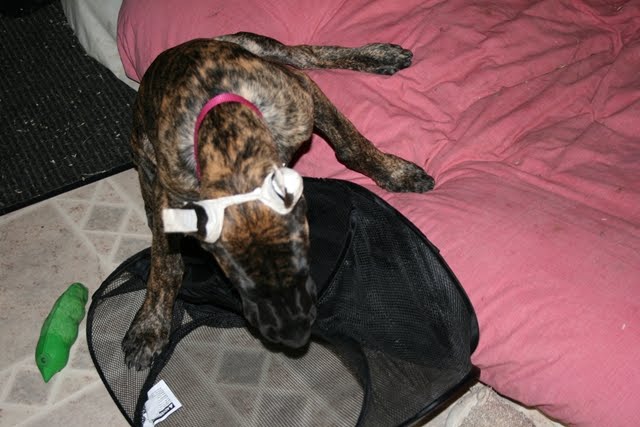
More old photos - when Izzy was a baby she loved chewing on plastic things (she still likes plastic bottles!)

I got these pictures of her as a puppy - I think this is so stinkin' adorable!


Friday, January 29, 2021

Far-back Friday

I ran across this picture of Dakota when she was young enough to not be all grey yet!  If she thought I had been on the computer enough that day she would just lay her head on my keyboard.


Thursday, January 28, 2021

More lure coursing

 Since videos seem to be playing properly again, here are some of Izzy and Ellie enjoying the chase:

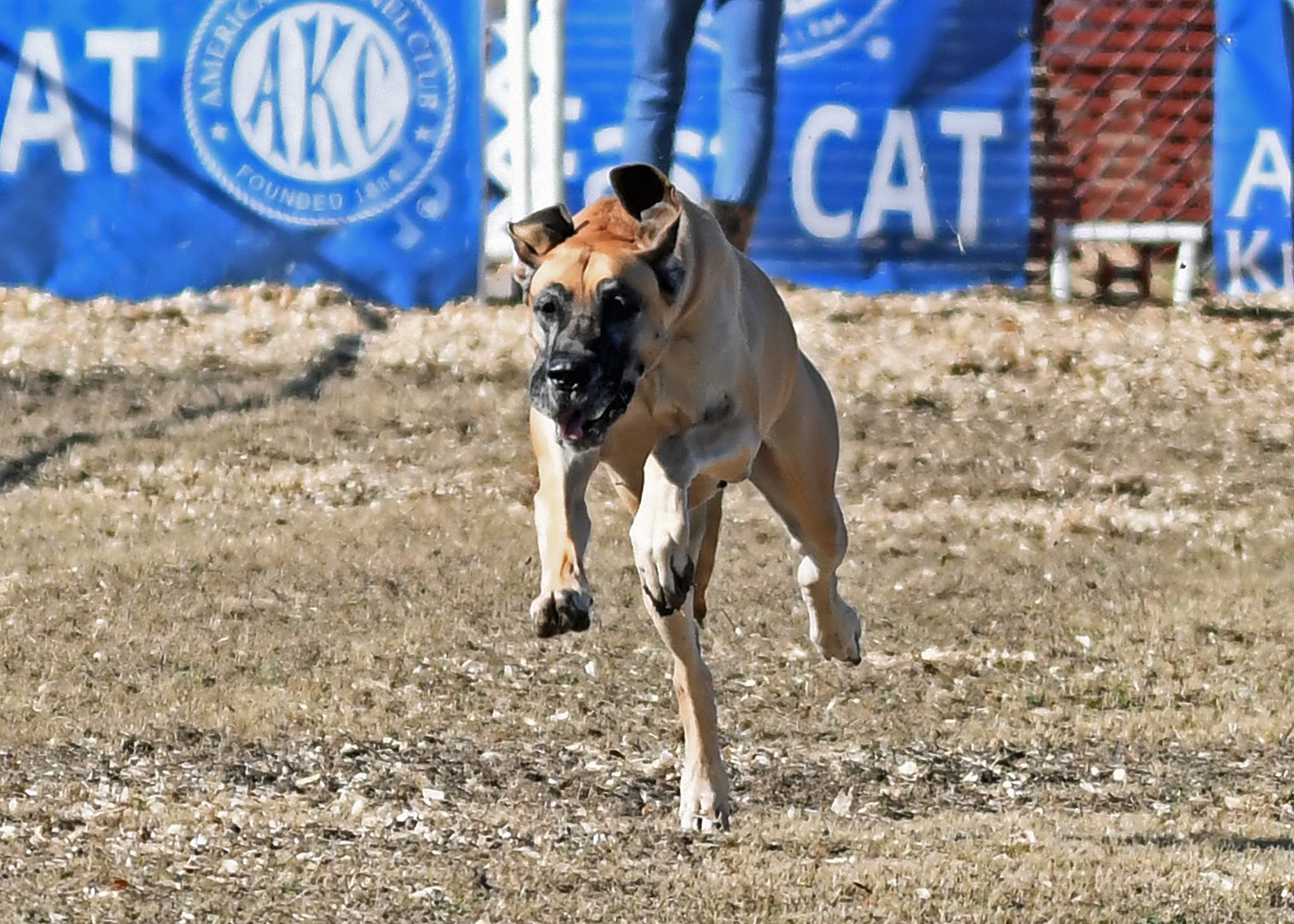
Here is Ellie doing a CAT (Coursing Ability Test) - approximately 600 yards.  It's pass/fail, the dog is judged on the willingness to keep chasing the lure.


In contrast, here they are running the Fast CAT - this is a straight 100 yard dash.  The run is timed, and the dog gets points based on the average speed.  Our Danes usually run it in a little over 8 seconds, which converts to a little over 24 mph.  This is the average speed - considering that it takes them a stride or two to get up to speed I'd like to know how fast they are going at the end!

Here is Izzy - her timed run was the first part, after the turn around she just chased it back to the start line:


And here is Ellie:


Wednesday, January 27, 2021

Hello again!

 I've said this before, but I really do want to start keeping this blog up again.  If only for my own memories - in many ways it's easier to look back and find old pictures or stories here than on Facebook or other social media.  Hence the recent Throwback posts.

But for something current, and sticking to the theme of "living with Great Danes" I took this video of Ellie eating spinach.  Plain, no-salt-added canned spinach, out of a spoon.  That girl will eat pretty much anything!  And how cute is she?


 Welp, apparently videos are not working on Blogger at the present time - supposedly they are working on it!  If you can't wait and want to see the video, here is the link: Ellie eats spinach

Tuesday, January 26, 2021

Throwback Tuesday: Dakota 15 - 16 weeks

 Going through my old drafts, I found this one about dear Dakota.  We had to say goodbye to her this past July (2020, just one more awful thing about that year!).  She was just a week shy of her 11th birthday, and was doing so well, very active though arthritic, and sassy and happy.  Then she had a terrible fall on our deck, blowing out a lumbar disc and lost all control in her hind legs.  We didn't want to put her through surgery that would have a small chance of success, so tried conservative treatment with steroids and pain meds.  She was very comfortable, still sassy, eating well - but couldn't walk at all.

This is where the size of a Dane is a real disadvantage.  If she were a small dog, we might have tried her in a wheelchair for dogs (although her front end wasn't all that strong) and therapy, etc.  But just transportation for a 120 lb non-ambulatory dog is a real challenge.  Not only physically difficult for the humans, but difficult to do in such a way that the dog is comfortable.  And a Dane-sized wheelchair would not work in our house with its corners and steps.

So we made the very difficult decision to let her go peacefully.  But oh my, we miss her!

So I was very happy to find these great memories.  I hope you enjoy them too!

 -------------------

OK, we're about caught up on Dakota - these were all taken in the past week or so, when she was 16 weeks old, give or take a few days. I love this first picture, it's not that often that I get a dog with their eyes closed! :-)

I'm just waiting for the flash.
Like all of our other Danes, she sleeps on her back a lot, and THAT is a shot that I just can't resist:
Pretzel? Or puppy? - you be the judge!
But she doesn't spend all her time sleeping... oh Hell no! Sometimes after she has taken all of the toys out of her toy box (which is actually a collapsible laundry basket) she likes to play with the basket. My friend Karen, who has her brother says he likes to do the same thing:
Any more toys in there?
If you come too close I'll whack you with this!
She and her Aunt Topper get along great! Maybe Topper is just happy to not be the only striped dog in the house anymore:
I was in the kitchen when I heard a lot of thumping and quiet play growling. If I stepped around the corner, they would stop playing and stand there looking at me, so these were taken by quickly peeping around the corner.

Monday, January 25, 2021

Throwback Monday

 Kinsey lived to be almost 13, which is a good lifespan for a giant breed dog.  She was healthy and active up to the end, but it wasn't all good genes.  Just like humans, dogs benefit from a healthy lifestyle and Kinsey competed in Agility until she was 10 - although at age 8 or 9 we moved her to an easier level with lower jump heights.  She seemed to enjoy this, which is the main reason we did it.  She liked going to classes too.  Here she is at age 9 or 10, at an agility seminar:


But as she got older, she started having trouble with arthritis.  This is as common a problem with older dogs as it is with older humans, and many of the same medications and treatments that are used in humans can help dogs.  **DISCLAIMER** Obviously, do NOT EVER give your dog any medication without checking with your vet!!  Although dogs and humans can sometimes take the same drugs, often times they can't.  Also, the dosage may be way different.

But anyway, our older Danes have benefited from a healthy diet, exercise as they can tolerate, NSAIDs (Non-Steroidal Anti-Inflammatory Drugs), pain-relieving therapies like chiropractic adjustments, acupuncture, cold laser, and also rehab to keep them strong!

Here is Kinsey doing the underwater treadmill back in 2014, when she was 12.  The warm water takes a lot of weight and stress off the joints as the dog exercises.  They are introduced to this gradually, with lots of treats.  In Kinsey's case, really a LOT of treats since if I didn't keep the treats coming she would just stop walking!  She always liked to set the rules.


One thing she did NOT have to be bribed for was the cold laser treatment.  It's called a "cold" laser because it doesn't heat up the way a standard laser does, it never gets hot enough to damage tissue.  But it does create warmth and stimulates blood flow, and Kinsey LOVED IT.  You can just see the waves of contentment coming off her here:

The therapist's little French Bulldog liked to curl up with Kinsey during these treatments - I nearly died from the cuteness!

We cater to their comfort at home too.  Years ago a chiropractic vet recommended putting a heat lamp over one of the dog beds, so the could get under it or not as they choose.  We use a "brooder" lamp which is designed to keep baby chicks warm.  It's very safe around animals and safe to keep on for long periods of time.  We use an infrared lamp - partly I think they work better, but it's also nice since they aren't so bright.

Anyway, Kinsey LOVED her heat lamp!!  She used it all during the fall, winter and spring.


And she wasn't the only one who liked it!  Our cat ZB often would commandeer the bed.  Even though she is so small, the dogs have so much respect (cough*fear*cough) for her that they won't try to get on the bed when she is there!


We have been fortunate with our Danes for several decades now, they have all lived to 10 or more.  Right now we don't have any elder Danes, just two youngsters.  But gosh I miss those sweet grey faces!


Saturday, January 23, 2021

Lure Coursing

 Lure Coursing is a sport in which dogs chase a "lure" - usually a white bag, but many things can be used.  Sort of like the way greyhounds chase a fake rabbit on a racetrack.

Until a few years ago, only Sighthounds (Greyhounds, Whippets, etc) were allowed to compete in lure coursing in AKC.  Then they started an event called a "Coursing Ability Test" or CAT in which any breed could compete.  The lure is dragged over a winding course on a flat field: 600 yards for most dogs, but small dogs and brachiocephalic breeds can run 300 yards.  For the CAT, there is no official time and it's a pass/fail test: does the dog keep chasing the lure?  3 successful runs gets the dog a Coursing Ability title (CA).  Additional successful runs get higher titles.

I tried this with Dakota for the first time when she was 6, and she thought it was stupid.  "It's just a plastic bag!"

But the younger dogs like it, and we have found that if they learn the game when they are young, they often will continue to enjoy it for years.  Of course they know it's just a bag, but they enjoy the chase anyway.

These photos are all of Ellie, enjoying the chase:


Cones are used to cover the pulleys, which are used wherever the line dragging the lure goes around a turn:


Here she is at the end, about to catch the bag!


A few years later, the AKC introduced another lure coursing event called the Fast CAT.  This is a much shorter course, a straight 100 yards.  The dog is timed, and the time is converted to miles per hour.  Then they get points based on the mph.  For small dogs, there is a handicap process in which they get more speed points than they would otherwise.  150 points gets the dog a novice Fast CAT - which is abbreviated as BCAT for some reason.

You can get great head-on photos at a Fast CAT, since the dogs are running in a straight line.  Here's Ellie:

And several great pictures of Izzy.  I have lots more photos of Izzy doing Fast CAT than regular CAT, because she likes the Fast CAT better.  Ellie likes them both.  We have a friend who has a dog who loves the regular CAT but not the straight, shorter Fast CAT so much.  Every dog is different!


This last one is my favorite, with her tongue flying like a flag!

If you are interested in doing this with your dog, they have to be at least a year old (although some clubs hold practice runs at the end of the day that are good for puppies).  Go to https://www.akc.org/sports/coursing/coursing-ability-test/ for more information.

Thursday, April 14, 2016

Things have been pretty quiet around here

...But that's good, right?  I'll try to get caught up.  First, Ronnie has been having a great time showing Topper as a Veteran.  She has always liked to show, and at 9 and now 10 years of age she looks amazing.  Last summer she won Best Veteran In Show in Oklahoma City!

Her brother Teddy has been having fun in Nosework, a sport where dogs are trained to search an area for a specific odor.  Here he is in the early stages of training, when we use a lot of simple items like cardboard boxes to help teach the dogs to search.

Tuesday, July 08, 2014

Dakota's first agility run

Dakota's first Agility Q, in Standard!  This was taken last spring.
She's still very green here, but so happy and willing to work.  I love her attitude.


So far in 2014

Hello again!  Sorry I've dropped the ball on posting again.  We've been busy!

Teddy and I finished his Rally Advanced Excellent title earlier this year - this is the highest title available in AKC Rally, and requires that the dog qualify in BOTH the Advanced B AND Excellent B classes, at the same trial (same day) for one  leg... and you need 10 legs for the title!  So that's 20 Rally courses and 20 qualifying runs.  Teddy did it perfectly, with some very nice scores.

Also, Dakota and I have been competing in Agility this year, and she's already finished both her Novice Agility preferred and Novice Jumpers preferred titles!  I've started doing more Preferred classes with my Danes in Agility, just so the jump heights are a bit lower - easier on their joints, and hopefully they will be able to continue to play in agility for a long, long time.

Monday, January 20, 2014

AKC Rally Explained, Part 2

In this post we'll start to talk about the Rally signs.

Overview:
Since the dog will be heeling on your left, in most cases the handler should follow a path that will keep the Rally signs on his or her right side.  Makes sense when you think of it: it makes the Rally signs easier for the handler to see, and you don't have to worry about the dog tripping over a sign. The signs used on a particular course will be numbered in the order that they should be performed.

I've added notes about the training origin of the Rally exercises, since Rally is based on training "doodles" that have been used for generations to help teach dogs better heeling and to improve other obedience exercises - as well as to make training interesting!  You don't want to drill the same thing over and over or you'll both get bored!  I think it helps to understand the exercises, if you know something about what they are supposed to DO.
-----------------------

#1 START
All Rally courses will have a Start sign to show the handler where the beginning of the course is.  The dog does not have to be sitting, but should be in Heel position.  The handler and dog should wait by that sign until the judge says "Forward".  Rally courses are timed, and the time starts when the judge says "Forward", not necessarily when the team passes the Start sign.  There is no minimum time in Rally, nor are there time penalties.  The time is ONLY used to break ties for placements in the class.

The Start sign looks like this:
 

Let me take a break here before we get into any more signs and talk about the Reference numbers.

See the "N, A, X-#1" in the upper right corner?  That sort of thing will be in the corner of all Rally signs,
The "N" means that this sign may be used on a Novice course.  The "A" means this sign may be used on an Advanced course.  The "X" means this sign may be used on an Excellent level course.
 In other words, when you see "N, A, X" that is a sign that may be used at all levels.

The "#1" is the Reference number for the Start sign.  That means this is the first sign listed among the AKC Rally signs.  The reference number makes it more convenient for course designers to find the sign they want to use in the stack - there are a lot of signs!  It can also be useful for competitors if you want to look up a sign to be sure how to perform that exercise.  The signs that are allowed in the different classes are grouped together.  Signs that may be used in Novice courses will all have Reference numbers less than 100.  Signs that may be used in Advanced and Excellent, but NOT Novice, will have Reference numbers between 100 and 199.  Signs that may ONLY be used on Excellent courses will have Reference numbers in the 200s.

For these posts, I've grouped the Rally signs based on similarities: either in the type of exercise or in how they look, so you can start to learn to tell the differences.  So we aren't going to go through them all in strictly numerical order.
 ----------------------

#2 FINISH
 
The Finish sign indicates the end of the course.  The time will stop when the team passes by the Finish sign.
----------------------
Before we continue, a word about how Rally is scored in AKC.  A perfect score is 100, and a 70 or better is required in order to qualify.  One qualifying score = one "leg" toward a Rally title.  Novice, Advanced, and Excellent each require 3 "legs" to earn the title.  You must complete the Novice title before you can compete in Advanced, and you must finish the Advanced title before you compete in Excellent.  After Excellent, there is an additional title called the Rally Advanced Excellent title.  This requires the dog and handler to qualify in BOTH the Advanced AND the Excellent class, in one trial, to equal one "leg".  And for the RAE you have to get 10 legs!  But for all of these titles, class placements are not necessary.  Theoretically, every dog in every class could qualify - and in fact, the qualifying rate in Rally is usually pretty high.  Rally is not super easy, but it is very doable for most dog and handler teams.  Which makes it less stressful, and a GREAT event for handlers who are new to dog shows!

Anyway, back to the scoring.  For each exercise sign, there are certain essential elements, and other elements that are desired but not essential.  If the dog and handler fail to perform an essential element, then they are deducted 10 points for an Incorrect Performance (IP).  Otherwise, they are deducted anything from 1 to 10 points for other errors.  "Do -Overs" (called a Re-try) are allowed in Rally, you may try any exercise again if you didn't do it right the first time.  Just one re-try per exercise is allowed, and you get a 3 point deduction for the re-try.  So it's not something you want to do unless you've made a major mistake. You will want to read the Rules and Regulations for details on scoring, but as I talk about the signs I'll point out the essential elements.  They will be written in Bold.  You can find the Regs here: http://www.akc.org/rules/index.cfm

*One of the biggest causes of lost points in Novice, is a tight leash.  The dog is on leash for the entire course in Novice, but the leash must be LOOSE.  Every time the leash gets tight, you'll get a deduction.  In Advanced and Excellent, the dog is off leash the whole time.  In Rally, the handler can talk to the dog and use hand signals pretty much as often as desired.
---------------------------

First, we'll talk about some of the basic change of direction signs.  These are self explanatory, but there are a few things to keep in mind:
  • If the sign is for a change in direction, it will be in front of you - i.e. in your path.  Instead of on your right like most signs.
  • You still want to do the change of direction fairly close to the sign - don't cut corners or you can get a penalty.  You want to keep your turns smooth, so allow just enough room or make the turn comfortably.
  • Remember that as you make turns, the dog should be moving with you and staying in Heel position.  This means that when you are turning to the Right, the dog will have to speed up to stay with you.  When you are turning Left, the dog will have to slow down.
------------------------------
 #5 Right Turn

5. Right Turn: The handler and dog make a smooth 90 degree turn to the Right without stopping.  This sign may be used more than once in a Rally course.
----------------------

#6 Left Turn

6. Left Turn: the team makes a smooth 90 degree turn to the Left without stopping.  This sign also may be used more than once.
----------------------

#7 About Turn Right

7. About Turn–Right: While heeling, the team makes a 180° about turn to the handler’s right.  This sign may be used more than once.
*Note - this should be a fairly tight turn but does NOT have to be a pivot, or an in-place turn.  It's fine to walk forward through the turn.

Training origin: The Right Turn, Left Turn, and About Turn are traditional elements of the Obedience heeling pattern.  They test the dog's ability to stay in Heel position by the handler's left leg: when turning to the left, the dog must slow down a bit or she will be forging ahead... when turning Right or doing a traditional About Turn, the dog must speed up stay in position.
----------------------

#8 About "U" Turn
 
 8. About “U” Turn: While heeling, the team makes a 180° turn to the handler’s left.  This sign also may be used more than once.
*Note: again, this should be a fairly tight turn but does not have to be in-place: the team should keep moving forward.

Training origin: the "U" turn is a frequently used training exercise, once the dog has started to understand that he must slow down on Left turns, to REALLY get him to slow down, even step backward, in order to stay in Heel position.
----------------------

#9 270 Right Turn
 
  9. *270° Right Turn: While heeling, the team makes a 270° turn to the handler’s right. 270° turns are performed as a tight circle, but not around the exercise sign.
This sign may be used more than once.

NOTE: The yellow arrow shows you the path you will take as you make this turn.  Can you see that, even though you are turning to your right to make this turn, you will end up going to the left?  From a course building standpoint, this sign works the same as a left turn.
----------------------

#10 270 Left Turn

 10. 270° Left Turn: While heeling, the team makes a 270° turn to the handler’s left. 270° turns are performed as a tight circle, but not around the exercise sign.  This sign may be used more than once.

NOTE: as with #9, this sign will have you turning in one direction, but ultimately changing your direction to go the other way.  In this case, you turn to the left but it works like a Right turn.
The thing that helps me keep it straight is to think of following the yellow arrow's path.  As long as you know which way you should be going when you've completed this turn, it will help keep you from getting lost.

The 270 degree turns are MAJOR cause of handlers getting lost on Rally courses!  If you have trouble with this, go to http://www.akc.org/dog_shows_trials/rally/index.cfm and at the bottom of the page you can see a link to print a set of Rally signs.  You just need to print the ones you have trouble with, or want to practice.  Print a full-sized copy and put it up somewhere in your house where you'll see it several times a day.  Practice the footwork without your dog.  In a day or two you'll know that sign by heart!  This is also a very effective strategy for signs that are easily confused with each other.

Training origin: Again, these are exercises to help the dog learn to speed up on Right turns, and slow down on Left turns in order to stay in Heel position.
------------------------------
Some basic Stationary exercises:  After the description for some Rally signs, you'll see the notation
(Stationary Exercise).  The number of Stationary exercises is limited in Rally, because the courses are supposed to have some flow and that won't happen if you are constantly stopping.

In Novice level - and all the signs we're talking about now can be used on Novice courses - the total number of exercises on a course should be between 10 to 15 signs.  At least 3 but no more than 5 of those should be Stationary exercises.

#3 HALT - Sit

3. HALT–Sit: While heeling, the handler halts and the dog sits in heel position. The team then moves forward, with the dog in heel position.
(Stationary exercise)
Note: as with all Rally exercises, the handler may talk to the dog and/or give hand signals.  In other words, as you walk up to this sign and prepare to halt, you may tell your dog to "Sit" and use a hand signal if you want.  As soon as your dog is sitting, you can go on.

Training origin: this is the basic Halt, with the dog sitting in Heel position, used throughout traditional obedience.
----------------------
Remember the bit about "essential elements"?  That's the phrase in Bold.  That means that if you don't do that part, you won't get credit for any other part of the exercise.
----------------------
#4 HALT - Sit - Down
4. HALT–Down Dog: While heeling, the handler halts and the dog sits. The handler then commands and/or signals the dog to down, followed by the command to heel forward from the down position. (Stationary exercise)
After the dog sits, he shouldn't stand up before lying down in this exercise.  As soon as the dog is all the way down, the handler and dog may heel forward to the next sign. The dog should not sit before he moves forward.

Training origin: this exercise will never be used in traditional obedience, but is often used in training just to change things up, and keep it interesting.
----------------------
NOTE:  See the big red "Halt" stop signs in the upper left corner of these signs?  That tells you that this exercise starts with the handler standing still and the dog sitting in Heel position.  In the case of sign #3, that's the whole exercise.  But for many Rally signs, that sit in Heel position is just the starting point.  So to save space on the signs, later on you won't see the word "Sit" on the sign in reference to that first Halt and Sit.  But if you see that big red stop sign, you'll know that the first thing you do when you get to that sign is halt, and have your dog sit.
----------------------
Here are two signs that involve turns, but are NOT changes of direction:
----------------------
#11 360 degree Right Turn: 
  and #12 360 degree Left Turn:  


Each of these exercises are  performed as a tight circle, with the dog staying by the Handler's left side in Heel position.  The circle is to be performed near the sign, but NOT around the sign.
Be sure to notice which way the circle turns!  If you do the circle in the wrong direction, that is 10 points off for an Incorrect Performance!

Training origin: circles have long been used to start to teach the dog the Figure 8, which is a traditional exercise.  Like the turns - but more so! - when making a circle the dog must speed up when going to the Right, and slow down when going to the Left.
----------------------
Finally, there are signs that indicate a change of pace, or speed.  Normally, heeling should be done a a brisk walk.  It doesn't matter much what size your dog is, since pretty much any dog can easily move faster than a walking human.  I tell my students that your Normal heeling pace should be the kind of walk you do when you are wanting to get somewhere, but aren't in a terrible hurry.  It should be a comfortable, brisk pace. 
----------------------
#17 Slow Pace, and #18 Fast Pace. 


Either of these must be followed by #19 Normal Pace, except that the Slow may be the last sign on the course.


The change of speed must be noticeable, and should happen near the sign (usually slightly in front and to the left of the sign) just like any of the other exercises.  I tell my students that the Slow Pace is a stroll, like if you were window shopping.  For the Fast Pace, the handler should break into a jog.

Training origin: changes of pace are traditional obedience exercises: the dog should learn to stay in Heel position as the handler moves freely about, turning, slowing down, speeding up, stopping.

That is enough for this post!  With these basic signs, you could design yourself a simple, practice Rally course.  Try it!  Print out a few signs, and you can even just lay them on the ground to start with.  Try making a little course in your back yard.  If you want to read more about the AKC Rally signs here are more resources:

The official AKC Obedience and Rally rules, with Rally signs and descriptions

Color images of the signs with annotations regarding their definitions. 

One final tip: as we go through all the signs, you will find at least some that are confusing for you.  And you'll find signs that are hard to tell apart.  The best tip I've ever had for dealing with these signs is to print out a full page copy of the sign (black & white is fine) and post it somewhere in your house where you will see it several times a day.  In a hallway, on your refrigerator, etc.  Every time you walk up to that sign, stop and perform the action as if you had your dog with you.  You do NOT need to fetch your dog every time!  In fact, it's best if you get the exercise firmly in your mind, and get comfortable with any footwork, BEFORE you try it with your dog.   After a few days you will know it by heart.

Monday, January 06, 2014

AKC Rally Explained, Part 1

I don't know if I have any readers left since it's been so long since I updated this poor neglected blog... but in case there is anyone out there searching for help with Rally I thought I'd start a series based on Rally classes I have taught.

Intro: "Rally" refers to Rally Obedience, which is sort of a hybrid of regular Obedience and Agility.  The Agility influence is seen in the structure: Rally classes consist of unique courses designed by the judge.  But instead of lots of jumps, tunnels and other obstacles, the elements of the course consist of different Obedience exercises.  Some of these exercises are identical (or nearly identical) to required movements in regular Obedience.  Many of them however, are based on training exercises (sometimes referred to as "doodles") used by trainers to help polish a team's Obedience performance.  These training exercises may be designed to help perfect a dog's Heeling position, or Finishes, or Fronts or some other required performance.

In Rally competition, signs are used to tell the handler what exercise to perform.  The handler follows the signs in order around the course.  In Rally, the judge only gives the team one command: After asking "Are you ready?" (and getting an affirmative answer from the handler) the judge says "Forward".  After that, the handler is on her own, and must rely on an understanding of all the Rally signs to know what to do.

In AKC Rally (which is what this series will focus on) there are 3 classes:
  1. Novice.  The dog is shown on lead for the entire course.  The course will consist of 10 to 15 exercise stations (not counting START and FINISH).  There are no jumps in Novice.
  2. Advanced.  After the dog has earned the Rally Novice title (done by earning at least 3 qualifying scores) you may show in Advanced.  In Advanced, the dog is shown off lead for the entire course, and the course will consist of between 12 to 17 exercise stations.  This will also include some exercise signs that cannot be used on a Novice course.  (more about that in the next installment).  There is one jump on every Advanced course.
  3. Excellent.  After you've completed a Rally Advanced title, you may enter Excellent.  This is also done off lead, and will consist of between 15 to 20 exercise stations.  There are two jumps in every Excellent course.

Since it is so important for the handler to have a really good understanding of the Rally signs, this series is going to focus on explaining what the different Rally signs mean.  Some of them are really quite self-explanatory, but many are quite confusing.

However, since this is the very start I'm going to explain some basic Obedience terms to be sure everyone knows what I'm talking about.  Part 2 will start talking about specific Rally signs, so if you are already experienced with basic Obedience you can skip forward now :-)

Heel position: 
Officially, the AKC Rules state that "The heel position as defined in these regulations applies whether the dog is sitting, standing, lying down or moving at heel.  The dog should be at the handler's left side straight in line with the direction the handler is facing.  The area from the dog's head to shoulder is to be in line with the handler's left hip.  The dog should be close to, but not crowding, its handler so that the handler has freedom of motion at all times."
Sounds simple, doesn't it?  But it takes a lot of practice to get it right.  While it is true that the same level of perfection is not required in Rally as in regular Obedience, the dog and handler MUST still be able to work together as a team, and the dog should be able to stay reasonably close to the handler's left side throughout all the exercises (except when the handler is required to leave the dog's side to complete the exercise).
A good obedience class is the best way to learn how to teach your dog to Heel, but there are also many articles and videos online about teaching Heel position (Google "Heel position dog obedience").  One good one about how to start teaching this basic skill is here:
http://www.onlinedogcoach.com/index/lessons/competition-obedience-fundamentals/heel-on-left-obed

Front:
 From the AKC Rules: the dog should "sit straight, centered in front of the the handler.  The dog must be close enough to its handler so that the handler could touch its head without excessive bending, stretching or moving either foot."  The Front is the position the dog should usually take after being called by the handler.


Finish:
This term describes the movement the dog must make to get from "Front" back to "Heel position".  There are two ways the dog may do this: either by going to the handler's Right, around behind the handler and to the handler's left side; or by swinging around on the handler's Left and then sitting on the handler's left side.  Ideally, the Finish movement should be performed "briskly" by the dog.


More about getting started in Rally is here:
http://classic.akc.org/events/rally/getting_started.cfm

The full Obedience and Rally regulations are here:
https://images.akc.org/pdf/rulebooks/RO2999.pdf

Here is a picture of Teddy and me doing an Advanced Rally course, which is why he's off lead - in Novice the dog stays on lead the whole time.  You can't read any of the signs in this photo,  but you can see the back of one in front of my right foot, and another next to the orange cone on the far left in the photo.  Rally signs may be held up by anything that works - sticking them to a cone is pretty common in my area, but for this course sections of PVC pipe was used (with slots cut in to fit the signs).  Wire holders are often used too.  As long as the handler can see the signs, it will work.

Sunday, May 13, 2012

Dakota has finally learned a solid recall (fancy way of saying that I finally won the war of whether or not she would come when I call her LOL) so we could start Agility classes.  She graduated from her beginner's class a few weeks ago, and I think she did a grand job!  She's obviously still very, very green but she's doing all the obstacles happily - her weaves are actually pretty awesome, especially considering that night was the very first time she'd seen a whole set of 12 instead of just 6.

Sunday, October 02, 2011

Jimmy needs a new home!

Hi all,
I'm sorry I've been so scarce lately. Just wanted to post this flyer about Jimmy, a lovely Harlequin Dane currently in foster care at the Dane Angel Network. Jimmy is healthy now, and really needs to find a forever home!

The Dane Angel Network does NOT adopt out of the North Texas/Dallas-Fort Worth area. If you know anyone who might be interested in Jimmy, pass this information along and have them contact Midge.

If you are in another area but are thinking of adopting a Great Dane, go to the Rescue page at the GDCA website for information about a Rescue in your area!